About us
About WeaveLines.
A custom software development company in Tunis, founded in 2017, designing and building products for startups and corporates wherever they are. The people you speak with are the people doing the work.
 20+ MVPs · 150+ startups
20+
MVPs launched
150+
Startups coached
12
Mentorship programs
4.9
Rating on Clutch
01 · Our story
Built from the founder’s side of the table.
WeaveLines started in 2017 in Tunis. Much of what the team knows about launching comes from two places at once: building 20+ MVPs, and coaching more than 150 startups across 12 accelerator and mentorship programs. The same questions come up cohort after cohort. What to build first, what to leave out, and how to show investors and first customers something real before the money runs out.
That is the distance WeaveLines exists to close, between an idea and something people can use, quickly enough that the founder learns from real users while there is still time to change course. It is why product management and design sit next to engineering rather than in front of it, and why every engagement begins with a conversation about the business before it begins with a backlog.
WeaveLines has been woman-owned and woman-led since it started in 2017.
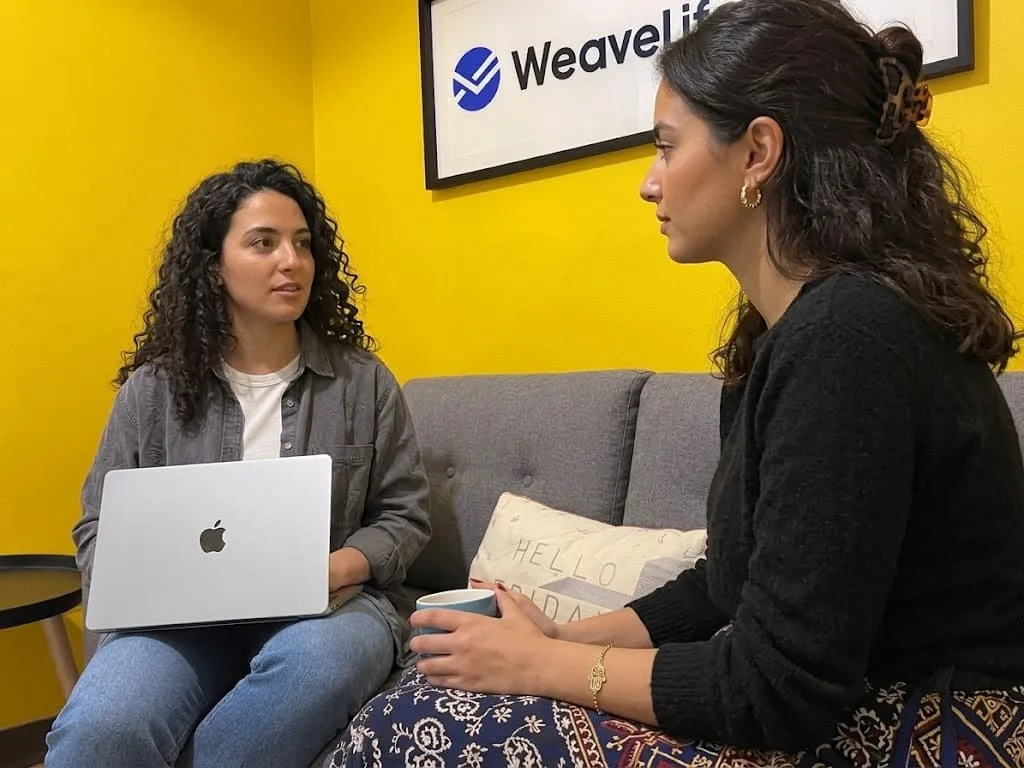 Started 2017 · In Tunis
02 · Leadership
Who leads the work.
Faten Matmati
Founder & CEO
Faten founded WeaveLines in Tunis in 2017 and leads it as CEO. She has written most of what the blog publishes since 2019, on the questions founders bring: what to build first, how to prototype it, how to find product-market fit, and how to choose the team to build it with.

03 · What clients keep saying
Three things come up again and again.
The reviews on Clutch, rated 4.9 out of 5, say it better than we could.
The business, not only the build
Founders describe a team that thinks about monetization, retention and the roadmap alongside the code, and that had worked with startups before rather than only with technology.
Clear about what we can take on
Clients mention a team that listens, says plainly what it can and cannot do, and steps through a project methodically rather than promising everything at once.
Still there years later
Several of the relationships on our profile began in 2018, 2019 and 2022 and are still running, with fixes often turned around within a business day.
04 · What we do
Custom software for startups and corporates, from the first idea to the releases after launch.
- 01
Product design
Research, then a working prototype in days, shaped with you until it is close to the product that will ship, with a designer making every decision and AI speeding up the work between them.
- 02
Web development
Platforms, dashboards and the integrations behind them, built in TypeScript with the standards a product needs to stay up after launch.
- 03
Mobile development
iOS and Android, with payments, notifications and the device features a product actually uses.
- 04
Product management
Scope, priorities and a plan with a number against it, so what ships first is what the business needs first.
05 · What you can expect
A demo of working software every two weeks.
Work runs in two-week sprints, and each one ends with a demo of the working product rather than a status report. You see the board we work from, and the people building your product are the people who answer your questions.
Every change is tested automatically, the ones that carry risk are reviewed by a second engineer, and everything is deployed through separate development, staging and production environments, with monitoring in place before launch. When the engagement ends, the code and the documentation are handed over clean, and they are yours.
06 · Selected work
Two of the products behind those numbers.


07 · Programs we have mentored in
Accelerators and programs where we have coached founders and run workshops.
Among themFlat6labs · Rainmaking · Misk Launchpad · Ignite · Startup Wise Guys · Startup Bootcamp · AfricArena · SuperCharger Ventures · AgriTech4Tunisia · Sunbolah




Blog
From the blog.
Perspectives on launching products, drawn from the work itself.
Why we build mobile apps with React Native and Expo in 2026
One codebase that feels native on iOS and Android, custom interfaces when the product calls for them, EAS for builds and updates, a maintained library for almost everything, native modules when you need them, and a stack that AI coding agents handle better than most. These are the reasons React Native with Expo is our default for mobile.
What actually gets faster with AI-assisted development, and what does not
AI coding assistants make some engineering work dramatically faster and leave the rest exactly as slow. This article covers the numbers from studies and agencies, what we see on our own projects, and the practices that decide whether the speed is real.
Ready when you are
Find out what it would take.
Tell us what you are building and where you have reached. The first call is with the people who would shape, design and build it.