Product Design
UI/UX design for web, mobile and AI products.
We research, put a working prototype in your hands within days, and shape it with you until it is as close as we can get it to the product that will ship. Then our own engineers build it, so the design keeps improving instead of being handed over.
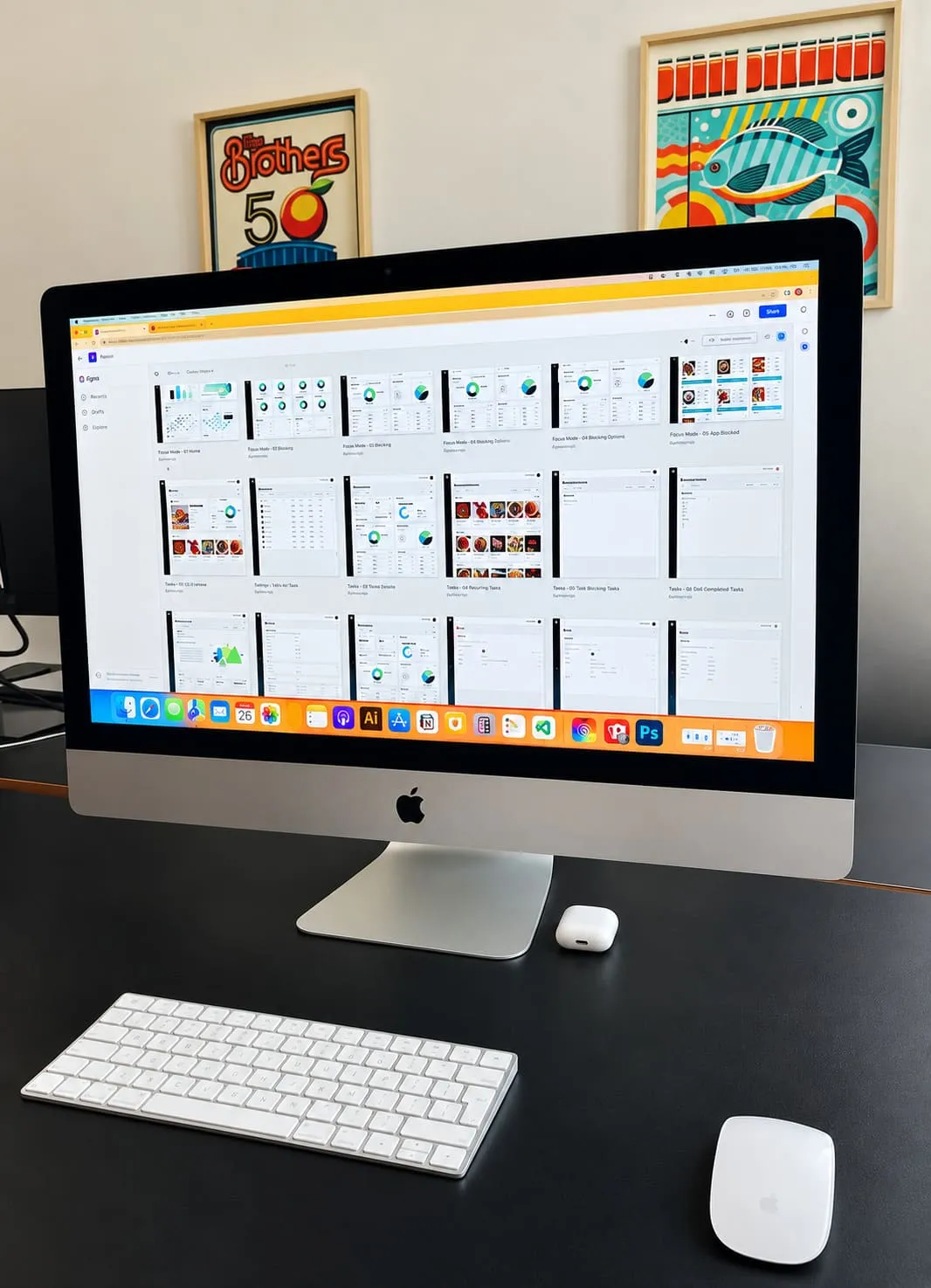 Working prototype · In days










01 · What we design
Everything a product needs designed,
from its first screen to the system it grows on.
Web and mobile apps
The screens and flows of the product itself, on the web and in iOS and Android apps. That means one interface that holds together everywhere it ships.
Dashboards and data
Data-heavy interfaces where the hard part is deciding what to show. That means a screen that answers the question its reader arrived with, instead of showing everything at once.
UX audit
A review of the product you have and how people move through it. That means the friction points named and ranked, before anyone redraws a screen.
Competitor UX analysis
What the products your users already know do well, and where they leave an opening. That means a design that is familiar where it should be and different where it counts.
Product redesign
A new interface for a product that already has users, tested against the current one. That means the people who pay you today are not asked to relearn it.
Design systems
The components and tokens the product is built from, in the codebase and in a design file when your team works in one. That means the tenth screen costs less than the first.
Marketing sites
The site that explains the product to someone who has never seen it. That means a page designed to convert rather than to decorate.
Brand identity
Name, mark, type and colour, when the product needs its own. That means a product that looks like itself rather than like its template.
- User research
- Working prototypes
- Interface design
- Design systems
- Dashboards
- Brand identity
02 · How the work runs
A designer decides.
Every time.
The designer decides
One version, chosen for reasons you can hear
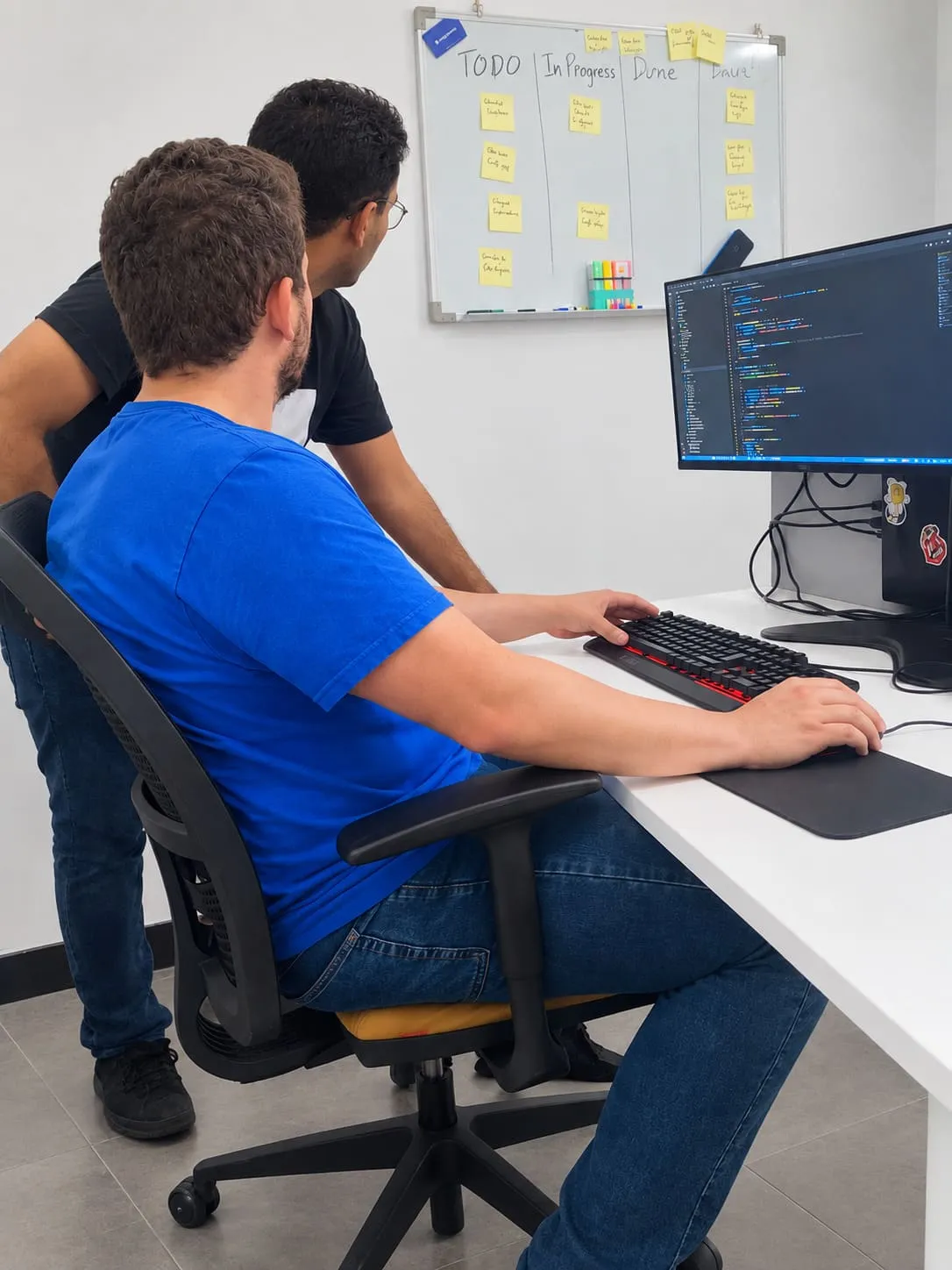
A product has more possible flows than a first version needs, and choosing which ones go in is the decision the rest of the project rests on. Our designers own the problem, the flows and every decision about the interface. The tools have made the drawing faster, and they have not made the choosing easier.
A working prototype, in days
Something to use, and to show
Real screens, real flows, and the states a demo usually skips, running on a phone or in a browser, so you can put it in front of customers and investors and watch what they do with it. The flows that carry the most risk are tested on realistic data before engineering touches them, because the questions a click-through cannot answer are the expensive ones.
The designer stays with the build
What you approve is what ships
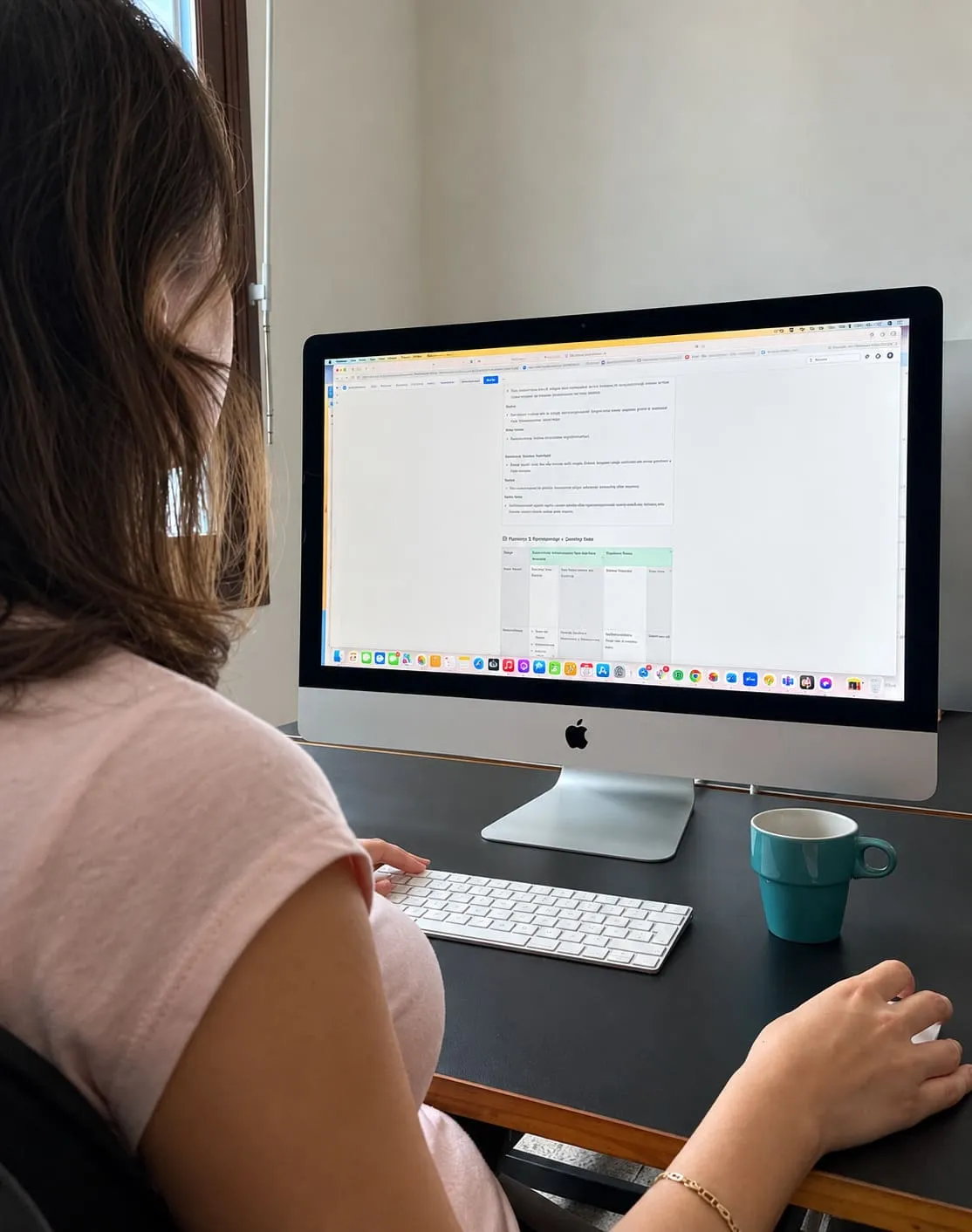
Design and engineering happen in the same place, so nothing is thrown over a wall. The designer stays with the build, the design system takes shape in the code as the components are built, and the interface keeps improving until it ships rather than being signed off and left behind.

03 · What arrives when
Every step ends on a date, with something you can use.
Design and engineering happen in the same place, so nothing waits for a handover and nothing is specified twice. That is where the speed comes from, and it is why a prototype can become the product instead of a picture of it.
A working prototype, in days
Real screens, real flows and the states a demo skips, from the day the scope is agreed.
The design settled, in short rounds
Shaped with you until it is as close as we can get it to the product that will ship, sometimes live in the meeting.
The interface built alongside
Engineering starts from the validated prototype while the designer stays with the build, so the design keeps improving rather than waiting.
An MVP live in 2 to 6 weeks
When what you are building is a focused first version, the design is part of how it goes live in that window.
04 · The design process
Four steps, and something in your hands at the end of each.
Where you start decides which step you start at. Every one of them ends in a deliverable you own rather than a status update.
How do we decide what the first version needs?
Days
You receive a research summary, a competitive analysis and user flows
Before any screen, we map who uses the product, what they are trying to do, and where the one they have today helps them or gets in the way, alongside what the competitors do. Screens come after the behaviour is clear, and a designer decides which flows the first version needs.
How do we get a working prototype in front of people?
Days
You receive a working prototype to use, and to show to customers and investors
A working prototype with real screens, real flows and the states that get left out: loading, empty, partial, uncertain and override. The flows that carry the most risk are tested on realistic data before engineering touches them, so the questions a click-through cannot answer are answered here. A designer directs it with AI design tools and decides what is kept.
How do we settle the design with you?
Short rounds
You receive the design you will ship, agreed screen by screen
We shape the prototype with you in short rounds, sometimes live in the meeting, until it is as close as we can get it to the product that will ship. Changes are quick and inexpensive at this stage, so this is where the flows and the screens are settled. Brand identity is designed here when the product needs its own.
How does the design survive the build?
Through the build
You receive the interface built with our engineers, or a handover your own can build from
Engineers build from the validated prototype, and the designer stays with the build, so the design keeps improving until it ships, because what is built is what reaches production. The design system takes shape in the code as the components are built. When your own engineers build it, they receive the prototype, written specifications, the component library and the brand assets, with a walkthrough.
05 · Designing AI products
Making AI feel trustworthy inside a real product is the hard part.
The model is rarely what stops people using a feature. These are the interface decisions that do, and each one is designed, specified and handed to engineering rather than invented on the day it is built.
Planning visibility
Before it acts
What the system intends to do, shown before it does it, so someone can let it run or stop it.
Tool use and sources
In the answer
Which tools it called and which sources a result rests on, beside the result rather than buried behind it.
Confidence signalling
On every output
When the model is unsure the interface says so, so a low-confidence answer is not read as a settled fact.
Override and correction
At any step
Easy ways to override, correct and give feedback on what the system did, and what the user corrects goes back into the product.
Progress and memory
Across a long task
Where a multi-step job has got to, and what the system remembers about the user and the work, with a way to see it and clear it.
Recovery routing
When it fails
Loading, empty, partial and uncertain states, and the hand-off to a person, specified rather than left for engineering to invent.
06 · What you get
Every deliverable of a product design engagement arrives in files you own.
Research summary and competitive analysis
Who the users are, what they are trying to accomplish, and what the products they already use get right and wrong.
User flows
The paths through the product, from first open to the moment of value.
Working prototype
Real screens, real flows and the states that get left out, on a phone or in a browser, in days, with the riskiest flows tested on realistic data.
Interface design
Every screen and state of the product, settled with you and refined through the build, with contrast and keyboard use considered as it is drawn.
Design system
The components and tokens, documented, so engineering builds from a system rather than from a screenshot.
Brand assets
The mark, the type and the colour, in the formats your team needs, when the product needs its own.
UX QA on staging
The built product checked against the design on staging, screen by screen and state by state, before anyone outside the team sees it.
Handover
The prototype, written specifications, the component library and the brand assets, in the format your team works in, with a walkthrough.
In their words
What clients say about the design.



20+
MVPs launched
150+
Startups coached
12
Mentorship programs
4.9
Rating on Clutch
07 · Related work
Products we have designed.


08 · Frequently asked questions
What founders ask about design.
What does product design include?
Product design covers UX and UI design: research, a competitive analysis and user flows, a working prototype in days, the interface refined with you until it is close to the product that will ship, the design system the product is built from, and brand identity when the product needs its own. We design and build in the same place, so the design keeps improving through the build rather than being handed off at the end.
Do you do user research?
Yes. We research your audience, your competitors and your market, together with what you know about your customers. The prototype then goes in front of your customers and investors, and their reactions shape the next version. We design from evidence rather than from taste alone.
How do you use AI in design?
Where it saves time: drafting UI, generating variations and assets, and drafting documentation. Research and the decisions that come out of it are not on that list, and neither is the thinking. A designer directs the tools, decides what is kept, and settles the product, its flows and its interface with you.
Do you design AI products?
Yes, and it is different work. Designing an AI product means designing for a system that is sometimes unsure: what it intends to do before it acts, where an answer came from, how someone overrides or corrects it, and what happens when it fails. We design those states as part of the interface rather than after it, and we build them too: assistants, answers grounded in your own data, and agents are what our AI development work covers.
How fast is it?
A first working prototype arrives in days, and we shape it with you in short rounds from there. The interface and the design system then keep improving alongside engineering rather than ahead of it, so design does not add weeks to the project. For an MVP, that is part of how it goes live in 2 to 6 weeks.
Can you audit or redesign a product we already have?
Yes, and they are two different engagements. An audit is a review of the product and how people move through it, ending in the friction points named and ranked. A redesign takes it further: we prototype the new interface in days and keep what works, so your users do not have to relearn everything at once.
Do you also build what you design?
Yes. Design and engineering happen in the same place, so the design keeps improving through the build and ships as agreed. If you have your own engineers, they receive the validated prototype, written specifications, the component library and tokens, and the brand assets, in the format your team works in, with a walkthrough.
Blog
From the blog
How we prototype with AI tools, from a brief to an interactive prototype in days
The first thing a client sees from WeaveLines is a high-fidelity interactive prototype, in days. How a brief becomes screens with Claude Design, Figma Make and Replit, what the designer decides, what we validate with you, and what happens next.
When a startup should build a design system, and what it saves later
A design system is the set of tokens, components and rules that keeps a product consistent as it grows. For a startup the question is not whether to have one but when. This article covers what a design system is, what it saves, when it is too early, and how to start small.
Navigating the Startup Journey with Customer Personas
Customer personas help startup founders and entrepreneurs in B2B (business-to-business) markets understand and target their ideal customers with greater precision.
09 · Services
What we build from it.
A design earns its keep when it ships. These are the services that take it there.
See your product before it is built.
Tell us what you are building. A working prototype in days is the fastest way to establish whether it works.